Function, integration into quick-shut and emergency-stop systems, interaction of bottom valves and pull rope.
PROCESS
Safe control of the bottom valves plays a central role in LPG loading on pressurised tank cars. As long as the quick-closing bottom valves are open and the other plant conditions are met, the transfer process can take place. When the bottom valves are closed, the transfer is safely interrupted.
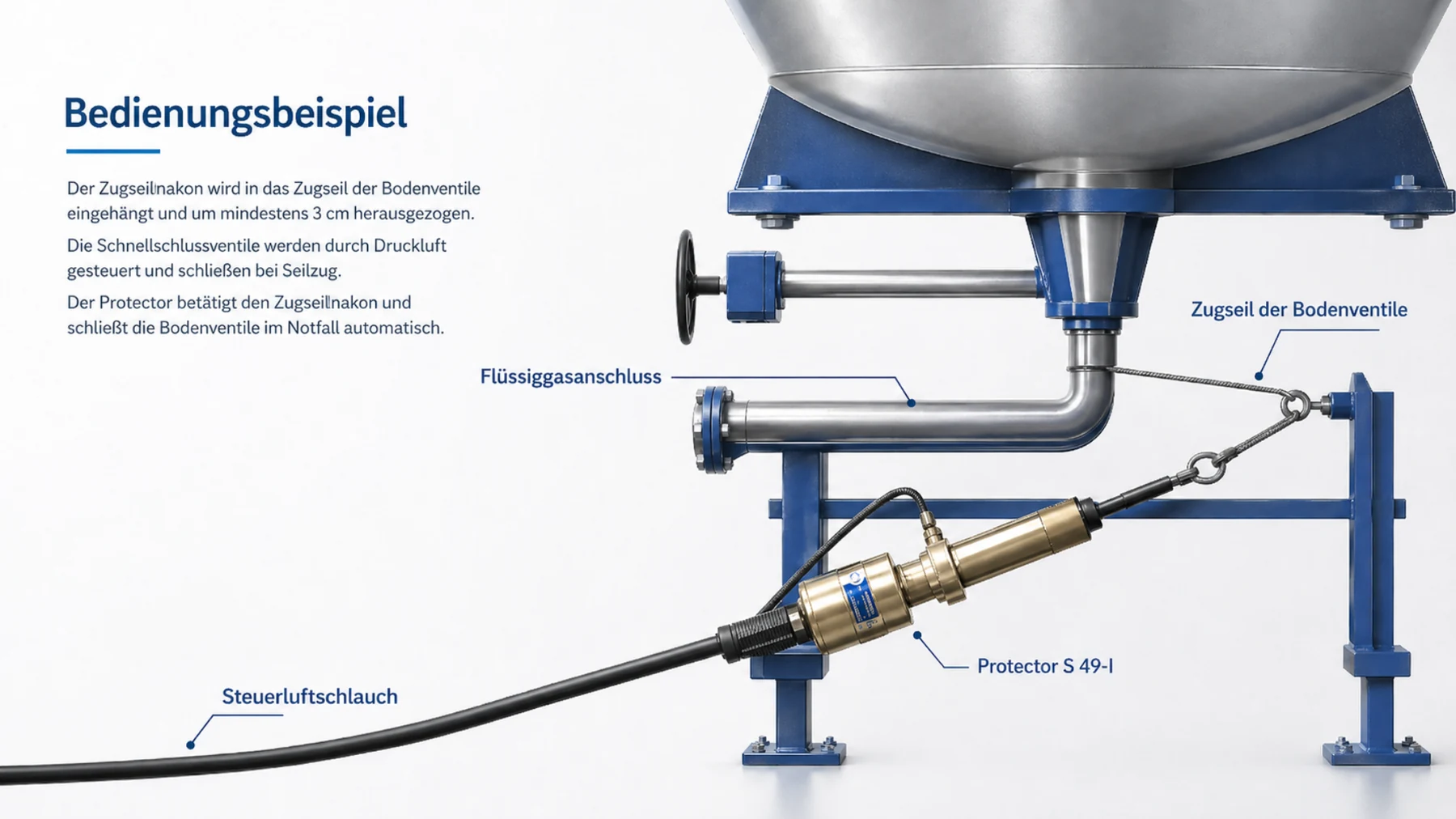
If appropriately integrated, the rail hook can be part of the safety chain of the loading station. Its function is directly linked to the open/closed state of the bottom valves.
In normal operation the rail hook holds the bottom valves open via the pull rope (tension rope according to DIN EN 12561-3). If the rail hook releases the pull rope, the bottom valves can close. The exact function depends on the technical design and integration of the respective installation.
In case of a malfunction, leakage, activation of the emergency stop system or unintended movement/rolling of the tank car the safety chain can be triggered, causing the bottom valves to close and securing the transfer process.
As long as the bottom valves are open and the other plant conditions are met, the transfer process can take place. When the bottom valves are closed, the transfer is safely interrupted.
The pull rope connects the rail hook mechanically with the bottom valves. Valve state is influenced via tensioning and release of the rope.
The reduction of the control pressure can cause the rail hook to release the pull rope and the bottom valves to close. The exact function depends on the technical design and integration of the respective installation.
The pneumatic rail hook Protector S49-I can be integrated into the quick-shut and emergency-stop system of the loading station. Exact integration depends on the design of the respective installation.
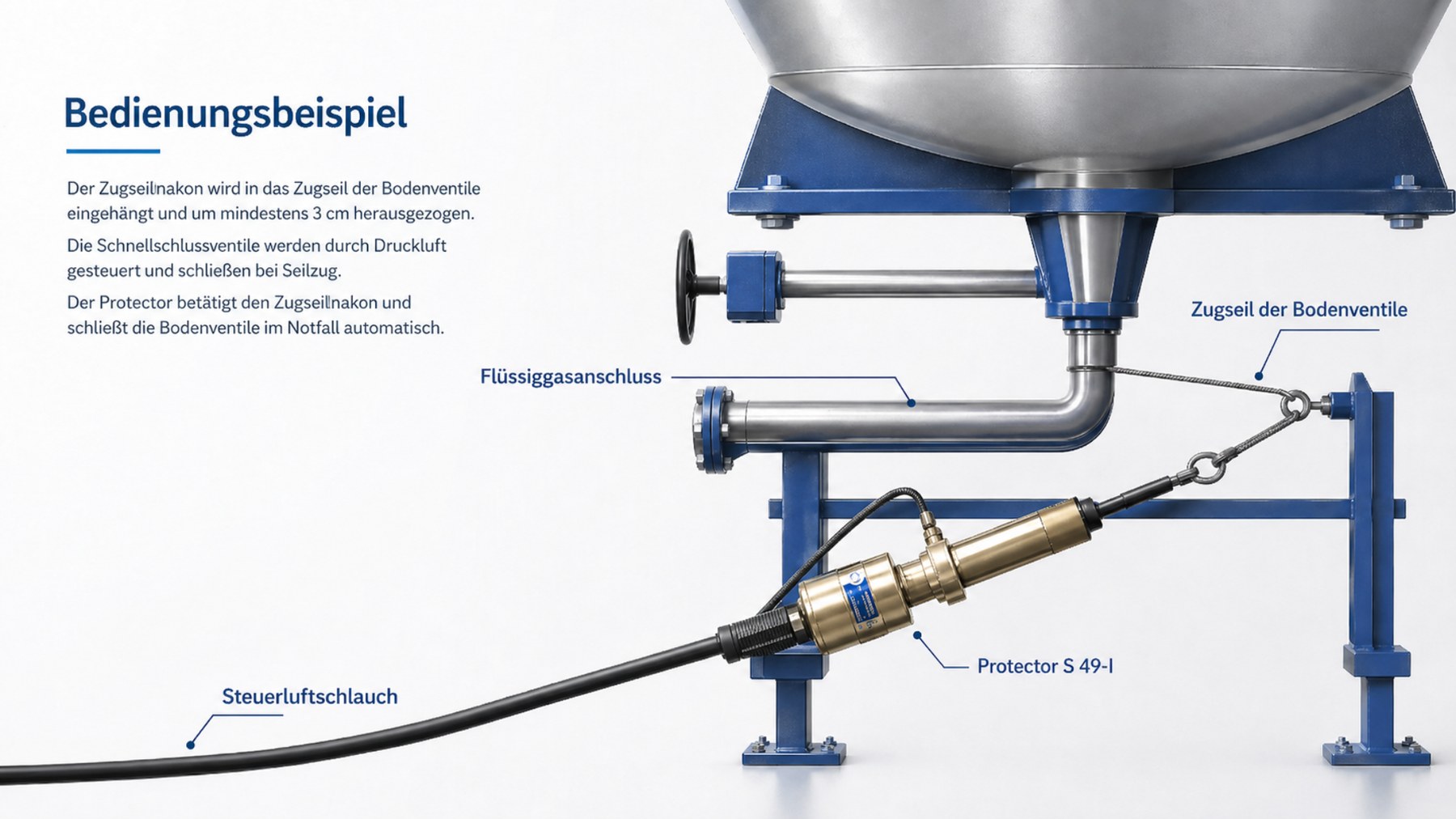
MS Sicherheitstechnik provides the Protector S49-I for this specific application. The Protector S49-I is a pneumatically controlled rail hook for rail tank cars in LPG loading.
Planning and project documents are available on request.
Product details →The Protector S49-I was tested by TÜV Rheinland and can be used according to the test report in Zone 1 and Zone 2. The full test report and further technical documents are available.
Safety & ATEX →For technical enquiries about LPG loading, the Protector S49-I and available documents, we are available by e-mail and phone.